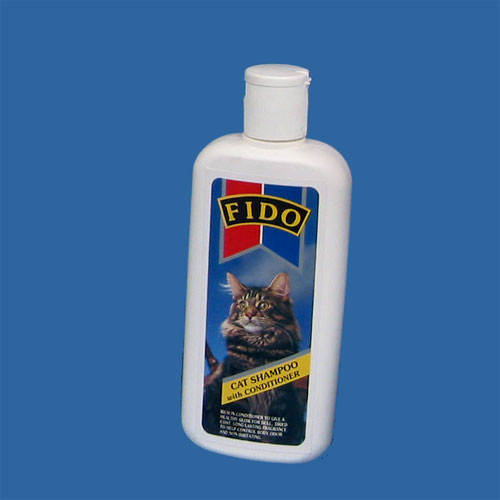
1.Shampoo.
2.Nail Clipper.


 Check inside the ears every week and if you see a waxy
residue, wipe it off with a cotton ball moistened with a small amount of feline
ear cleaner or baby oil. (Never use a swab on a stick; if your cat moves
suddenly, as he is wont to do, you may injure his ear canal or eardrum.) Hold
the ear flap gently and dab carefully with the cotton ball. If your cat fidgets
during cleaning, restrain him as you would when cutting his claws.
Check inside the ears every week and if you see a waxy
residue, wipe it off with a cotton ball moistened with a small amount of feline
ear cleaner or baby oil. (Never use a swab on a stick; if your cat moves
suddenly, as he is wont to do, you may injure his ear canal or eardrum.) Hold
the ear flap gently and dab carefully with the cotton ball. If your cat fidgets
during cleaning, restrain him as you would when cutting his claws. Although cats are tidy creatures by nature and groom
themselves, they still need regular brushing. In addition to removing loose
hair that would otherwise be swallowed or left on furniture, brushing promotes
good circulation, stimulates the skin, and keeps the coat shiny. It's also a
way to bond with your cat, as well as to check for any body changes that may
signal a visit to the vet. The procedure is much the same for shorthair and
longhair cats, but the tools will differ, depending on the length and texture
of your cat's fur. Be sure to check a longhair cat for mats before you start
brushing and very gently untangle any you find using your fingers or a
wide-toothed comb. Soak more tenacious knots with detangling liquid or spray.
If a mat won't come apart, you can, if you're very careful, snip it out with
blunt-tipped scissors. Your cat's skin is very sensitive, as well as being
loose, and it's fairly easy to make an accidental nick. Protect your cat by
placing a fine-toothed comb between the mat and his skin. The alternative is to
have mats removed by a professional groomer; if your cat is badly matted, this
is the only option. Begin grooming by passing the brush along the cat's head
and back. By following the same line you would if you were petting him, chances
are the cat will relax, lulled by the pleasant sensation. Then, brush down the
length of each side. As you go, stop often to clean the brush of collected
hair. Next, brush down from below the chin along the throat and chest. To brush
the inside of your cat's leg, hold him against your chest and reach over the
outside of the leg. Your cat may object when you get to such areas as the rear
thighs, the region where the legs join the body, and the belly. Be gentle and
reassuring, but persevere without overdoing it. If the cat is getting anxious,
stop and continue later; otherwise, you risk turning grooming into a hateful
experience. Do the tail last, one small section at a time, carefully combing in
the direction that the hair grows. Then, repeat the sequence with a
fine-toothed comb, taking particular care on sensitive areas, to pick up any
remaining loose hairs.
Although cats are tidy creatures by nature and groom
themselves, they still need regular brushing. In addition to removing loose
hair that would otherwise be swallowed or left on furniture, brushing promotes
good circulation, stimulates the skin, and keeps the coat shiny. It's also a
way to bond with your cat, as well as to check for any body changes that may
signal a visit to the vet. The procedure is much the same for shorthair and
longhair cats, but the tools will differ, depending on the length and texture
of your cat's fur. Be sure to check a longhair cat for mats before you start
brushing and very gently untangle any you find using your fingers or a
wide-toothed comb. Soak more tenacious knots with detangling liquid or spray.
If a mat won't come apart, you can, if you're very careful, snip it out with
blunt-tipped scissors. Your cat's skin is very sensitive, as well as being
loose, and it's fairly easy to make an accidental nick. Protect your cat by
placing a fine-toothed comb between the mat and his skin. The alternative is to
have mats removed by a professional groomer; if your cat is badly matted, this
is the only option. Begin grooming by passing the brush along the cat's head
and back. By following the same line you would if you were petting him, chances
are the cat will relax, lulled by the pleasant sensation. Then, brush down the
length of each side. As you go, stop often to clean the brush of collected
hair. Next, brush down from below the chin along the throat and chest. To brush
the inside of your cat's leg, hold him against your chest and reach over the
outside of the leg. Your cat may object when you get to such areas as the rear
thighs, the region where the legs join the body, and the belly. Be gentle and
reassuring, but persevere without overdoing it. If the cat is getting anxious,
stop and continue later; otherwise, you risk turning grooming into a hateful
experience. Do the tail last, one small section at a time, carefully combing in
the direction that the hair grows. Then, repeat the sequence with a
fine-toothed comb, taking particular care on sensitive areas, to pick up any
remaining loose hairs. An older or injured cat may not be able to keep itself
adequately clean and may need to be bathed. Some cats become very agitated
during the process, however, so it's up to you to make bathing as stress-free
as possible for all participants. You'll probably want a helper so one of you
can hold the cat while the other does the shampooing. Both of you will probably
get quite wet, so have lots of towels at the ready. It's also possible that you
may get scratched, so take a few moments to trim the claws first. Placing
something in the sink or tub that your cat can grip with his claws — a window
screen, rubber mat, or several thick towels — may help him feel slightly more
in control and less inclined to struggle. Never dump your cat into a sink full
of water; total immersion is not the idea here. Instead, fill the sink with
just enough warm water to rinse him easily. Hold your cat firmly, with one hand
grasping his front legs, and place him in the water. Pour water over him with a
small container and use a washcloth to wet more delicate areas such as the face
and ears. Standard shampoos formulated for cats should be rubbed in thoroughly,
and fully rinsed. Any traces of shampoo left on the cat's coat can cause
irritation; so don't rush through this stage. If you are washing the cat with a
flea shampoo, follow the directions for the product to the letter. After
properly rinsing your cat, wrap him in a thick towel and hold him close to
absorb the excess water. Continue drying by carefully squeezing the towel
against his body and pulling it away again. You can gently rub shorthair cats
with a towel, but this may cause matting in cats with longer coats. A small
hair dryer can be useful (unless your cat is frightened by the noise of the
motor). Keep the hair dryer on its lowest setting and never point it in your
cat's face. Once he is dry, brush him thoroughly and compliment him effusively on
how wonderful he looks.
An older or injured cat may not be able to keep itself
adequately clean and may need to be bathed. Some cats become very agitated
during the process, however, so it's up to you to make bathing as stress-free
as possible for all participants. You'll probably want a helper so one of you
can hold the cat while the other does the shampooing. Both of you will probably
get quite wet, so have lots of towels at the ready. It's also possible that you
may get scratched, so take a few moments to trim the claws first. Placing
something in the sink or tub that your cat can grip with his claws — a window
screen, rubber mat, or several thick towels — may help him feel slightly more
in control and less inclined to struggle. Never dump your cat into a sink full
of water; total immersion is not the idea here. Instead, fill the sink with
just enough warm water to rinse him easily. Hold your cat firmly, with one hand
grasping his front legs, and place him in the water. Pour water over him with a
small container and use a washcloth to wet more delicate areas such as the face
and ears. Standard shampoos formulated for cats should be rubbed in thoroughly,
and fully rinsed. Any traces of shampoo left on the cat's coat can cause
irritation; so don't rush through this stage. If you are washing the cat with a
flea shampoo, follow the directions for the product to the letter. After
properly rinsing your cat, wrap him in a thick towel and hold him close to
absorb the excess water. Continue drying by carefully squeezing the towel
against his body and pulling it away again. You can gently rub shorthair cats
with a towel, but this may cause matting in cats with longer coats. A small
hair dryer can be useful (unless your cat is frightened by the noise of the
motor). Keep the hair dryer on its lowest setting and never point it in your
cat's face. Once he is dry, brush him thoroughly and compliment him effusively on
how wonderful he looks. As part of a regular checkup, your vet will look for
signs of plaque and tartar buildup on your cat's teeth. Left unchecked,
periodontal disease can actually contribute to heart, liver, or kidney disease.
If a significant problem has begun to develop, a thorough cleaning, requiring
the cat to be anesthetized, will have to be scheduled. To avoid the bother and
expense of such cleaning, which is typically required every few years, brush
your cat's teeth at least every other day. This is not as difficult, or crazy,
as it might sound, as long as you introduce the procedure very slowly. For the
first few days, sit quietly with your cat and gently stroke the outside of his
cheeks. Then, let him lick a small quantity of cat dentifrice — never human
toothpaste mdash; off your finger. Next, place a small quantity of the paste on
a cat-sized toothbrush or gauze square. Gently push back the cat's top lip with
your thumb and brush one or two teeth and the neighboring gums in a circular
motion, pressing very lightly. Over several days, gradually brush a larger
number of teeth. After each short session, reward your cat with a treat,
preferably one for tartar control.
As part of a regular checkup, your vet will look for
signs of plaque and tartar buildup on your cat's teeth. Left unchecked,
periodontal disease can actually contribute to heart, liver, or kidney disease.
If a significant problem has begun to develop, a thorough cleaning, requiring
the cat to be anesthetized, will have to be scheduled. To avoid the bother and
expense of such cleaning, which is typically required every few years, brush
your cat's teeth at least every other day. This is not as difficult, or crazy,
as it might sound, as long as you introduce the procedure very slowly. For the
first few days, sit quietly with your cat and gently stroke the outside of his
cheeks. Then, let him lick a small quantity of cat dentifrice — never human
toothpaste mdash; off your finger. Next, place a small quantity of the paste on
a cat-sized toothbrush or gauze square. Gently push back the cat's top lip with
your thumb and brush one or two teeth and the neighboring gums in a circular
motion, pressing very lightly. Over several days, gradually brush a larger
number of teeth. After each short session, reward your cat with a treat,
preferably one for tartar control.

Second Day still the same but not to fierce...


